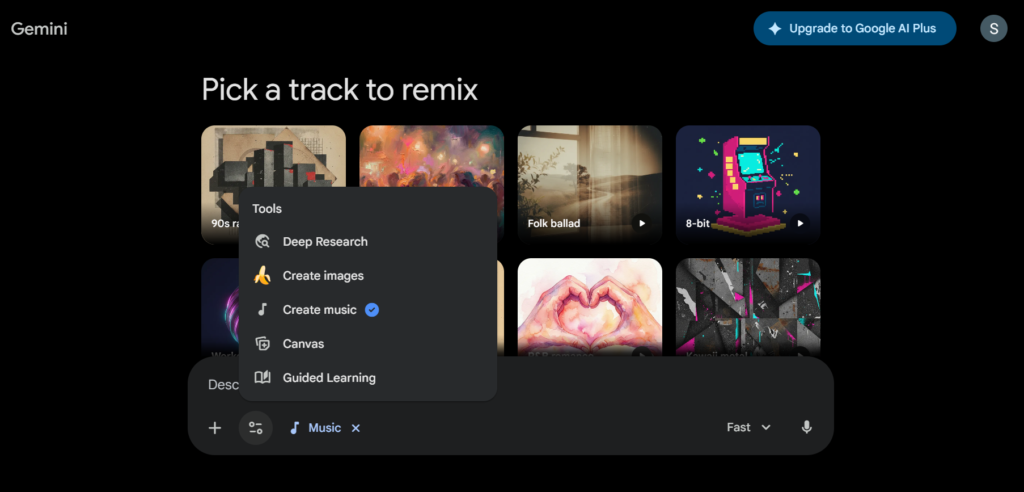
Lyria 3 in Gemini is Google’s latest AI music generation system, transforming photos, text, or videos into high-quality 30-second music tracks with custom lyrics. It is integrated directly into Gemini, allowing users to create jingles, pop beats, lo-fi songs, and more by writing down what they hear in their head.
In a global beta release on desktops, with mobile support to follow soon after its launch, Lyria 3 in Gemini is a significant leap forward in the field of generative audio tools. It integrates multimodal input, lyrical music generation, and embedded watermarking to provide built-in creative flexibility and transparency.
What Is Lyria 3 in Gemini?
Lyria 3 is a model for music generation integrated into Gemini, Google’s AI platform. It lets users create custom 30-second songs using:
- Text prompts
- Upload photos
- Videos uploaded
- Pre-built templates
Users can generate either:
- Full lyrical tracks
- Only instrumental compositions
The model analyzes descriptive inputs such as genre, mood, tempo, and theme, then creates the highest-quality tracks that meet the requirements.
Why Lyria 3 Matters for AI Music Generation?
AI musical instruments have advanced quickly. Lyria 3 within Gemini introduces several key improvements:
- Multimodal input (text, image, video)
- Built-in lyric writing
- Ultra-high quality output
- Watermarking embedded in audio
- Global availability
This establishes Lyria 3 as more than simply a novelty generator. It is a tool for marketers, creators, teachers, students, and anyone else who needs fast, customized soundtracks without traditional music-production workflows.
How does Lyria 3 in Gemini work?
1. Text-to-Tracks
Users describe a genre, mood, or scenario. Gemini will then create a suitable track.
Inputs, for example, could include:
- “Create a 90s skate punk rock song to remind my roommate clean the dishes.”
- “Make an energizing low-fi track to study.”
- “Write a fun birthday jingle that is upbeat and energetic.”
It interprets the following:
- Genre cues (punk rock, lo-fi, acoustic)
- Emotional tone (energetic, nostalgic, funny)
- Lyrical purpose (storytelling and humor, celebration)
It generates a 30-second, custom-made composition that aligns with the parameters.
2. Image or Video to Tracks
Lyria 3 allows the creation of multimodal songs.
Users upload a picture or video. Gemini examines:
- Visual elements
- Context
- Emotional tone
- Environment and subjects
Then it creates music that often includes lyrics reflecting how the listener feels about the material.
For example:
- Nature-inspired hiking photos, music track with acoustic
- Pet video – playful, upbeat song
- Films of travel – cinematic soundtrack
This multimodal technology distinguishes Lyria 3 from other music generators that rely solely on text.
3. Templates and Dynamic Suggestions
If users are unsure of what to do to prompt them effectively, Gemini provides:
- Music templates that can be remixed
- Dynamic suggestion prompts
Templates are accessible on desktops and are being rolled out to mobile devices. They lower barriers to entry and accelerate execution, allowing users to express their ideas more clearly.
Feature Comparison Table
| Feature | Lyria 3 in Gemini | Traditional Music Production |
|---|---|---|
| Input Types | Text, Image, Video | Manual composition |
| Lyrics Generation | Automatic | Manual writing |
| Production Time | Seconds | Hours to weeks |
| Audio Length | 30 seconds | Unlimited |
| Watermarking | Embedded SynthID | Not built-in |
This comparison demonstrates the strengths of Lyria 3 in speed and accessibility, while traditional production offers the advantages of full-length customization and creative control.
SynthID and AI Content Verification
All tracks created using Lyria 3 are embedded with SynthID, Google’s invisible watermarking system.
What SynthID Does:
- embeds an invisible marker in the generated audio
- Allows the validation of content generated by AI
- supports transparent and accountable AI use
Users can upload an audio file to Gemini and ask whether Google AI generated it. Gemini examines the SynthID to verify authenticity.
This extends verification capabilities beyond text and images into audio. This is an important advancement as the use of generative media grows more common.
Availability and Rollout
As of the announcement:
- Lyria 3 is rolling out in beta on desktop
- Mobile app availability is followed by several days
- Globally available to all users
Users can access the feature using:
- Visit Gemini. Gemini platform
- The tools menu is opened.
- Selecting “Create music.”
This integration helps keep the workflow within one AI environment.
Use Cases by Industry
| Industry | Example Use Case | Benefit |
|---|---|---|
| Content Creation | Custom short soundtrack for videos | Faster production |
| Marketing | Branded jingles | Cost-efficient campaigns |
| Education | Music-based learning aids | Enhanced engagement |
| Social Media | Personalized audio posts | Increased creativity |
| Personal Use | Event or celebration songs | Instant customization |
Personal Use for Celebration or event songs, Instantly customizable
Since they are on short forms (30 seconds), they are ideal for:
- Video and Reels
- Event invites
- Digital greetings
- Podcast intros
Benefits of Lyria 3 in Gemini
Speed and Accessibility
There is no musical education necessary. Users need to state what they are looking for.
Multimodal Creativity
The ability to create music from video or images enriches the music’s context.
Built-In Lyrics
removes the requirement for separate tools to write lyrics.
Transparency and Verification
SynthID watermarking strengthens responsible AI usage.
Global Rollout
Access to users worldwide increases the potential for adoption.
Limitations and Practical Considerations
While extremely powerful, Lyria 3 has constraints:
- 30-second maximum length
- Beta availability could be limited to the features at first
- Creative control is prompt-dependent
- Not a replacement for a full-length studio production
Professional-grade users who want multi-minute tracks that have detailed mixing controls might still require a traditional audio workstation.
For rapid prototyping and creative experiments, Lyria 3 provides substantial functionality.
The Future of AI Music Generation
Lyria 3 within Gemini represents a wider change in the field of generative AI:
- Multimodal creativity
- Embedded authenticity indicators
- Integration of tools inside AI ecosystems
As AI-generated audio becomes more popular, verification tools like SynthID are likely to become standard practice.
The integration of music creation into common AI assistants indicates convergence between conversational AI and creative production tools.
My Final Thoughts: Why Lyria 3 in Gemini Signals a Shift in AI Music
Lyria 3 within Gemini includes multimodal AI music generation, with integrated lyric creation and watermark verification. It allows users to convert images, ideas, or videos into custom soundtracks in just a few seconds, removing the barriers to music creativity.
Its integration with SynthID ensures transparency and addresses issues with AI-generated music. Although limited to short-form tracks, Lyria 3 offers speed, accessibility, and contextual insight that rethink how users work with AI software for making music.
As the field of generative audio continues to develop, Lyria 3 in Gemini is a significant step towards an accessible, verified multimodal AI-powered creativity.
FAQs About Lyria 3 in Gemini
1. What is Lyria 3 in Gemini?
Lyria3 is Google’s AI music-generation model in Gemini, which creates 30-second, high-quality tracks from photos, text, or videos.
2. Are there ways to have Lyria 3 generate lyrics automatically?
Yes. Users can request lyrics, and Gemini generates lyrics aligned with the request.
3. How can I get access to Lyria 3?
Open Gemini, open the Tools menu, and then select “Create music.” It’s available globally on mobile and desktop.
4. Do you think Lyria 3 tracks are watermarked?
Yes. Every track created contains an indistinct SynthID watermark to verify it.
5. Do I have to transfer an audio recording to verify whether AI created it?
Yes. You can upload the image to Gemini and ask if it was created using Google AI; Gemini tests for SynthID.
6. Are Lyria 3 suitable for professional music production?
It is ideal for short-form content and quick, experimental creativity rather than full-length studio work.
Also Read –
Gemini 3 Deep Think Upgrade Adds Sketch-to-3D Printing Capability